Table Of Content
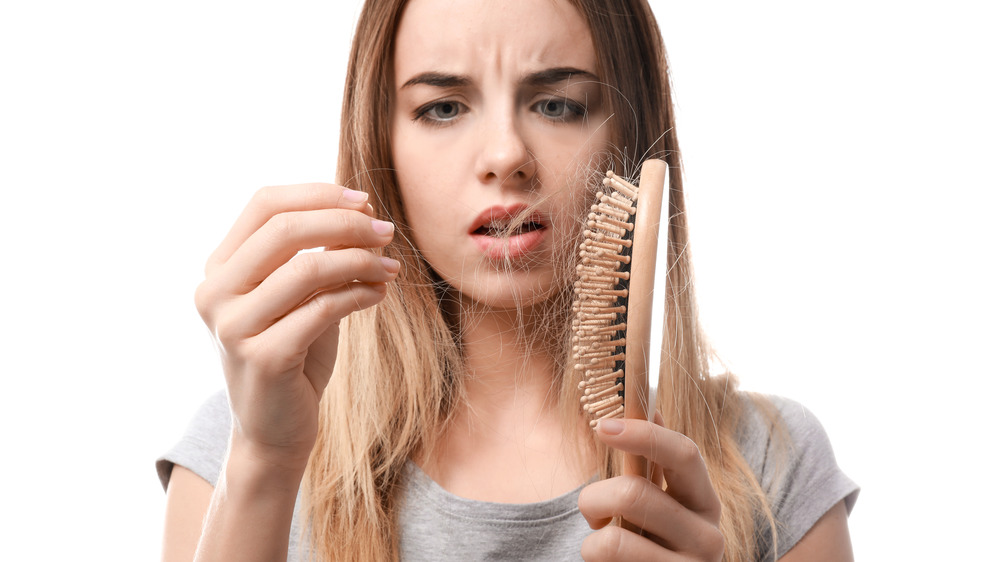
It’s the most significant cause of hair loss in women and people AFAB. Approximately 30 million women and people AFAB in the United States have female pattern baldness. Male and female pattern baldness are the main cause of hair loss. However, lifestyle factors, such as frequent tight hairstyles, and medical conditions, such as alopecia, can also cause hair loss. Male and female pattern baldness are the primary causes of hair loss, but it may also be due to other conditions or lifestyle factors. A doctor will want to explore the potential causes before recommending an appropriate treatment.
Hair Loss Trigger: Tight Hairstyles
Menopause and hair loss go hand in hand for many people. Studies show slightly more than half of all females experience some degree of menopause-related hair thinning or loss. In the meantime, you’re sure to find supplements that promise to regrow hair. Before taking any of these, it’s best to check with your dermatologist. Your dermatologist can also tell you whether we have any evidence to show that the supplement helps regrow hair. Researchers are just beginning to study this therapy as a treatment for hair loss.
Treating Hair Loss: Lasers
Your provider will note the width of your center part and any areas of your scalp showing signs of thinning or balding. Female pattern baldness can affect anyone assigned female at birth. However, you’re more likely to have female pattern baldness if you have a family history of hair loss or after menopause.
What can I expect if I have female pattern baldness?
See your dermatologist if you notice this type of hair loss. The sooner you start treatment, the better the chances for hair regrowth. Another cause of hair loss is called telogen effluvium (TE), which is typically temporary. According to the American Academy of Dermatology (AAD), TE isn’t actually defined as “hair loss,” but rather as excessive hair shedding. Chemotherapy, certain other drugs and radiation treatments can prompt hair loss, mainly in the growth phase.

Anyone can have androgenetic alopecia (pattern baldness). These hair changes can make it hard to maintain how you want to look, especially if you're transgender or nonbinary (which means you don't identify as fully male or female). You may want to shift where hair grows (or doesn't) to reflect your affirmed gender. Pregnancy, and especially giving birth, can lead to hair loss. You're most likely to see hair loss about 3 months after giving birth.
How Fast Does Hair Grow: Here's What to Expect - Health.com
How Fast Does Hair Grow: Here's What to Expect.
Posted: Mon, 31 Jul 2023 07:00:00 GMT [source]
When the treatment is stopped, hair loss will begin again within 12–24 weeks. Oestrogen is believed to stimulate hair growth, so when levels of the hormone decrease, it directly affects your hair. Factor in the potential for additional shedding from stress or vitamin and mineral deficiencies, and hair loss can become all the more pronounced. Hormones like estrogen and progesterone affect the rate of hair growth, the volume of individual strands, and the rate of hair shedding. Other health factors can contribute to hair thinning, so discuss excessive hair shedding with your healthcare provider to rule out other causes. Medications that help balance hormone levels are where it’s at for these conditions.
substantial weight loss over a short period of time
You might notice your hair seems fuller during pregnancy. That’s because high hormone levels keep resting hairs from falling out. But after the baby comes, things go back to normal and those strands will fall out quickly.
Treating Hair Loss: Medicine
MaryRuth's $1 Billion Solution To Thinning Hair And Aging Skin - Forbes
MaryRuth's $1 Billion Solution To Thinning Hair And Aging Skin.
Posted: Thu, 11 Jan 2024 08:00:00 GMT [source]
If your dermatologist suspects that the cause of your hair loss could be a disease, vitamin deficiency, hormone imbalance, or infection, you may need a blood test or scalp biopsy. These tests can be done in your dermatologist’s office. If a person has this condition, they should contact a doctor. A doctor may recommend corticosteroid injections to the scalp or prescribe other medication to help the hair grow back. If a doctor suspects a medication is causing hair loss, they may prescribe a lower dose or switch medications. It is natural for a certain amount of hair to shed every day.
Start by nixing traumatic styling practices from your roster, Dr. Lo Sicco says, such as aggressive brushing (no teasing!), excessive heat styling, bleaching, and chemical hair straightening. This article looks at what happens when hair falls out excessively, why this can occur, and where to seek treatment. There are multiple reasons (including physical and psychological) that can cause you to shed more hair than usual. If you want to diminish a noticeable scar, know these 10 things before having laser treatment. These dermatologists' tips tell you how to protect your skin.
These are male hormones that are found in females in smaller amounts than in males. Androgens can cause the hair follicles on the head to shrink, resulting in a type of hair loss known as androgenic alopecia. Androgenic alopecia refers to hereditary hair loss, like male pattern baldness or female pattern baldness, and is also known as “pattern alopecia” because it can happen to both males and females. Depending on what’s causing your hair loss, it may be temporary or permanent. Treatments can help people with certain types of hair loss.

There are hundreds of thousands of hairs on your head, and every single one them is at a different stage of its two- to five-year lifespan. Hair grows and dies in phases, and nutrition, stress, hygiene, and daily styling all play a role in how much hair you lose daily. It can help to address the physical aspects of hair loss.
If menopausal hair loss is severe, a hair transplant can help. A hair transplant is a surgical procedure that moves hair from one part of your body (commonly the back of the head) and implants it into bald spots. Laser treatments, also known as light therapy, work by applying low-intensity light to the scalp, triggering a reaction that signals new hair to grow. It’s thought that light increases the number of hair follicles and increases hair strength. More commonly used for treating scars, the technique involves a roller with hundreds of tiny needles that poke microscopic holes in the skin. This controlled injury prompts an immune system response that may help to promote hair growth.
The Food and Drug Administration has approved a low-level laser device as a treatment for hereditary hair loss in men and women. A few small studies have shown that it improves hair density. If your hair loss is caused by an underlying disease, treatment for that disease will be necessary. If a certain medication is causing the hair loss, your doctor may advise you to stop using it for a few months. Newer treatments that are also being explored include some forms of laser therapy, microneedling with PRP, as well as other oral medications.
Extreme diets that are too low in protein or certain vitamins, such as iron, can sometimes cause excessive hair shedding. Other forms of birth control that affect the hormones, such as implants and skin patches, may also cause hair loss. People may experience hair loss while using birth control pills. Others might experience hair loss several weeks or months after they stop taking birth control pills. Alopecia areata is an autoimmune condition that causes hair to fall out suddenly.


No comments:
Post a Comment